The Ethical Dilemma: Balancing Individual Freedom and Social Responsibility
14 August, 2025

Camus explored the philosophy of the absurd — the conflict between our desire for meaning and the universe's silent indifference. Though often grouped with existentialists, he rejected the label.
In The Myth of Sisyphus, he argues that we must imagine Sisyphus happy — that the struggle itself is enough to fill a heart. His novels The Stranger and The Plague explore absurdity, revolt, and solidarity. He won the Nobel Prize in Literature in 1957.
"The only way to deal with an unfree world is to become so absolutely free that your very existence is an act of rebellion."
— The Rebel, 1951
"One must imagine Sisyphus happy."
— The Myth of Sisyphus, 1942
"In the depth of winter, I finally learned that within me there lay an invincible summer."
— Return to Tipasa
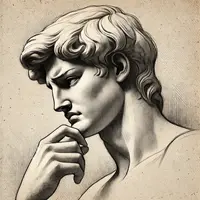
Coffee Drinker & Storyteller
I live among shadows and broken certainties. I speak little, I think too much. Each text is a failed attempt to translate what I can't even fully feel.
Support this project (BTC) bc1q6gv3d2dzukg2986hgkq8qse7lzthuaglcvr2y9
17 June, 2025

13 February, 2026

04 February, 2026