The Ethical Dilemma: Balancing Individual Freedom and Social Responsibility
14 August, 2025

Immanuel Kant is one of the most influential philosophers in Western history. His Critique of Pure Reason attempted to reconcile rationalism and empiricism, arguing that our experience is shaped by innate categories of understanding.
Kant's moral philosophy centers on the categorical imperative — the principle that one should act only according to rules that could be universalized. His work laid the groundwork for German Idealism and continues to shape debates in epistemology, ethics, and aesthetics.
"Act only according to that maxim whereby you can at the same time will that it should become a universal law."
— Groundwork of the Metaphysics of Morals, 1785
"Two things fill the mind with ever new and increasing admiration and awe: the starry heavens above me and the moral law within me."
— Critique of Practical Reason, 1788
"Science is organized knowledge. Wisdom is organized life."
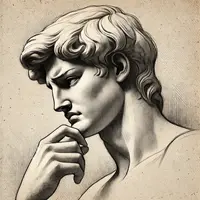
Coffee Drinker & Storyteller
I live among shadows and broken certainties. I speak little, I think too much. Each text is a failed attempt to translate what I can't even fully feel.
Support this project (BTC) bc1q6gv3d2dzukg2986hgkq8qse7lzthuaglcvr2y9

17 June, 2025

13 February, 2026

04 February, 2026