Introducing the Concept
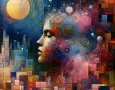
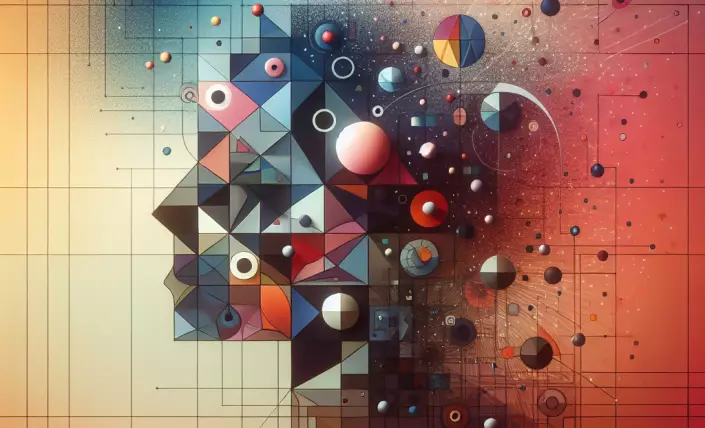
In the vast web of existence, our lives are but threads woven into an intricate tapestry. This image captures a profound philosophical insight: the interconnectedness of all things. It invites us to ponder the nature of reality and our place within it. At the heart of this contemplation is the idea that everything is part of a singular, infinite substance. This substance, despite its boundlessness, is not beyond our grasp. Rather, it permeates every aspect of existence, offering a lens through which we might view the world with clarity and humility.
This notion of unity challenges the fragmentation that often characterizes our perception. We see ourselves as distinct from others, separate from the natural world, and occasionally even isolated from our own selves. The concept prompts us to explore the dissolution of these boundaries, fostering a vision of harmony that transcends individual limitations. It does not imply a loss of identity but rather an expansion of perspective, urging us to embrace a more holistic understanding of existence.
Yet, the path to such understanding is fraught with complexity. It demands a reevaluation of deeply held beliefs and an openness to perspectives that might initially seem alien. The journey is both an intellectual and an existential one, leading us to questions that resonate at the core of human experience: What does it mean to be part of something greater? How do we reconcile individual desires with collective well-being? These questions are not merely theoretical; they have profound implications for how we live and interact with the world.
Origins and Context
The roots of this idea can be traced to a time when the world was undergoing seismic shifts in thought and understanding. The 17th century was an era of awakening, as the rigid structures of medieval Europe gave way to the dynamic explorations of the Renaissance and the Enlightenment. It was a period marked by the questioning of traditional authority, the rise of scientific inquiry, and the pursuit of knowledge for its own sake.
Within this milieu, thinkers began to reconsider the nature of divinity and the universe. The prevailing view of a God separate from His creation was challenged by the radical proposition that God and the universe are one. This pantheistic view suggested that everything in existence is imbued with the divine, a single substance manifesting in infinite forms. It was a perspective that bridged the gap between the sacred and the secular, proposing a vision of the world where spirituality and materiality were not in conflict but in concert.
This was also a time of personal trial for those who dared to think differently. The courage to articulate such ideas often came at great personal cost, as societal norms exerted formidable pressure to conform. Yet, these thinkers persisted, driven by a conviction that transcended immediate concerns. Their work laid the groundwork for future generations to explore the interconnectedness of existence with both rigor and imagination.
The Concept in Action
The implications of this unified view of reality can be observed in myriad aspects of life. Consider, for instance, our relationship with the natural world. When we perceive the environment not as a resource to be exploited, but as a living, integral part of a larger whole, our approach shifts from one of domination to one of stewardship. This perspective fosters sustainability and respect for the ecosystems that sustain us.
On a social level, the idea encourages us to see the humanity in others, dissolving the barriers built by race, nationality, or creed. It inspires an ethic of empathy and compassion, urging us to act in ways that honor the interconnectedness of all. Such an ethic is evident in movements that advocate for justice and equality, recognizing that the well-being of one is intrinsically linked to the well-being of all.
On a personal level, this concept invites introspection. It challenges us to examine our desires and motivations, encouraging alignment with a broader purpose. In this light, personal fulfillment is not an isolated pursuit but a harmonious resonance with the world around us. It suggests that true contentment arises from participation in the symphony of existence, rather than from the accumulation of individual achievements.
Critiques and Limitations
Despite its appeal, the notion of a singular substance has not been without its critics. Some argue that it oversimplifies the complexities of existence, glossing over the distinctiveness of individual entities. Critics assert that by emphasizing unity, the concept risks neglecting the richness that diversity brings to the tapestry of life.
Others contend that this perspective could lead to a deterministic worldview that undermines human agency. If everything is part of an immutable whole, what room is there for freedom or innovation? Such concerns highlight the tension between unity and individuality, a balance that remains delicate and contentious.
Moreover, in an age characterized by rapid technological advancements and cultural shifts, the idea of interconnectedness must evolve to address new challenges. It must accommodate the complexities of digital landscapes and global networks that redefine what it means to be connected. The task is to apply this ancient wisdom to contemporary issues, ensuring that it remains relevant and effective.
Why It Still Matters
In a world often divided by conflict and misunderstanding, the idea of a unified substance serves as a potent reminder of our shared humanity. It calls us to bridge the divides that seem insurmountable, fostering dialogue and reconciliation. In recognizing our interconnectedness, we are better equipped to address global challenges such as climate change, inequality, and pandemics.
The concept also resonates on a deeply personal level, offering solace in times of uncertainty. It provides a sense of belonging, assuring us that we are part of something greater than ourselves. This perspective can be a source of strength, inspiring resilience and hope.
Ultimately, the enduring value of this idea lies in its ability to transform our vision of the world. It encourages us to look beyond the surface, to seek out the threads of connection that bind us all. In doing so, we might cultivate a world that is more compassionate, more just, and more attuned to the harmony of existence.