
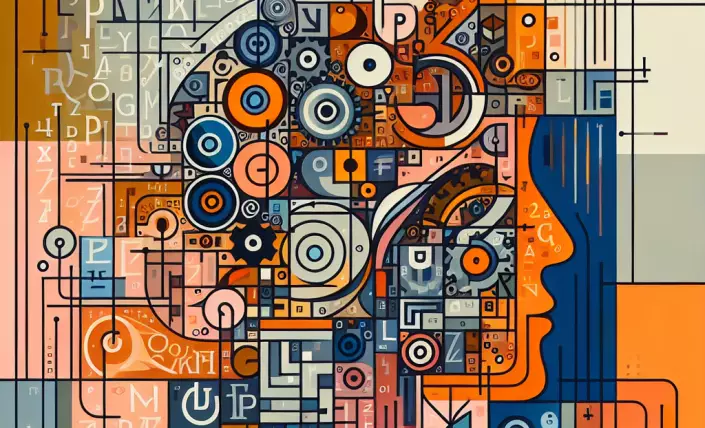
In a world bustling with explicit rules and evident structures, Friedrich Hayek's notion of spontaneous order emerges as a profound and sometimes disconcerting concept. It suggests that many of the systems that govern our lives, from the markets we buy from to the social norms we adhere to, are not the product of deliberate design but rather the outcome of countless individual actions, decisions, and interactions that coalesce into a coherent order. This seemingly paradoxical idea—that order can arise without a central orchestrator—challenges our intuitive understanding of how societal systems should operate.
The concept of spontaneous order invites us to reflect on the limitations of human knowledge and the dangers of overestimating our ability to control and design complex systems. Hayek posits that individual knowledge is inherently limited and dispersed, and thus, any attempt to centrally plan or control society is not only presumptuous but also destined to fall short. This is because no single individual or committee can possess the vast and nuanced information necessary to effectively manage the intricate web of human interactions. Each person, in their daily life, acts on knowledge of time and place that is unique to them, contributing to a larger tapestry that no one fully comprehends. This realization can be both humbling and liberating. It suggests that, while we may feel compelled to direct and control, there is a certain wisdom in allowing systems to evolve organically, harnessing the collective knowledge embedded in society.
Moreover, Hayek's insights urge us to reconsider the nature of freedom and its role in fostering creativity and innovation. In a society where spontaneous order is allowed to flourish, individuals are free to pursue their own goals, experiment, and make mistakes. This freedom, rather than leading to chaos, becomes a crucible for innovation and progress. When people are free to act independently, they can explore new ideas and solutions that a centralized authority might not foresee. This decentralized experimentation is crucial for adaptation and growth, allowing societies to respond dynamically to changes in the environment and circumstances. However, embracing this form of order requires a degree of trust in the processes of human interaction and a willingness to accept uncertainty. It challenges us to let go of the illusion of control and embrace the organic, often unpredictable, nature of human society.