Ancient Insight
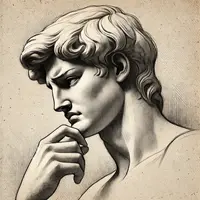
In many ancient cultures, the duality of light and shadow wasn't just a physical reality but a profound spiritual metaphor. The ancient Egyptians believed that one's shadow was a vital part of the soul, capable of traversing the boundary between life and death. Similarly, the Greeks spoke of the 'eidolon,' a shadowy double that accompanied each soul. These cultures implicitly acknowledged a paradox: that light, with all its clarity, was incomplete without its counterpart, shadow—a concept they neither fully resolved nor ignored.
The Idea's Journey
As human thought evolved, so did the exploration of this duality. In medieval and Renaissance times, the shadow was often seen through a moral lens, considered the darker aspects of human nature to be shunned or controlled. Yet, thinkers like Goethe and Nietzsche began to see the shadow as a necessary part of the human psyche, a reservoir of potential for both destruction and creativity. The tension between suppressing and embracing the shadow became a central theme in understanding human behavior—an idea that lingered in the margins of philosophical discussion.
Modern Manifestation
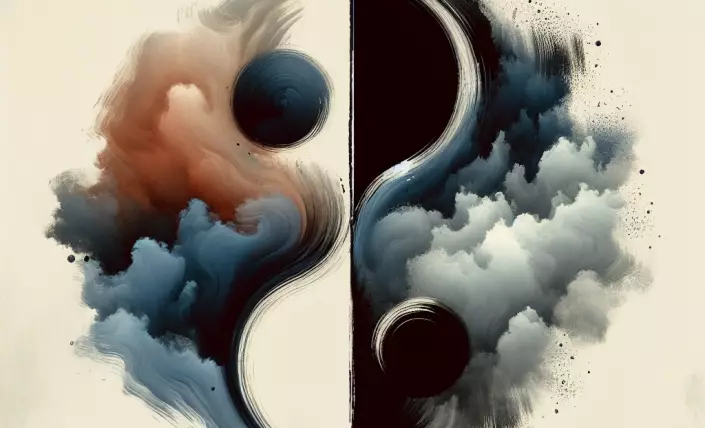
Today, the shadow is not just a metaphor but a lived reality. Take, for instance, the public figures whose curated lives on social media are starkly contrasted by the darker truths that sometimes emerge. This tension is not just personal but systemic, as societies struggle with their own shadows—inequality, prejudice, and environmental neglect. The modern manifestation of this paradox is that while we strive for transparency and clarity, the shadow grows in proportion to the light we cast, challenging us to confront aspects of ourselves and our communities we'd rather ignore.
Personal Application
In our personal lives, the shadow often whispers truths we are reluctant to hear. Consider the discomfort of a moral failing or a suppressed desire—elements of our shadow selves that beckon for acknowledgment. Yet, sitting with this discomfort can lead to profound insight. The tension, then, lies in the choice: do we listen to the shadow's whisper and integrate its lessons, or do we turn away, only to find it growing more insistent?