Opening Reflection
The dawn of comprehension often leaves us in a twilight of uncertainty. As we stand on the shore of understanding, the horizon shimmers with the promise of enlightenment, yet just as we draw closer, the light recedes, revealing new depths to explore. It is a dance of revelation and mystery, where clarity is fleeting and knowledge is less a possession than a pursuit. In this space, we are both enlightened and obscure, a paradox that beckons us toward deeper contemplation.
Consider the simple act of reading a book. As we turn the pages, we grasp the narrative, but with each revelation, an unspoken question lingers. What remains unseen, what lies between the lines, teases our awareness. Thus, in the very act of understanding, we encounter the limits of what can be known. The paradox is not in the contradiction but in the coexistence of knowledge and mystery.
Core Thesis
At the heart of our inquiry lies a fundamental tension: the more we seek to understand, the more we uncover the vastness of what remains beyond our grasp. This paradox is not merely an intellectual puzzle but a condition of our existence. To know is to recognize the boundaries of our knowing, and in this recognition, we find ourselves both empowered and humbled.
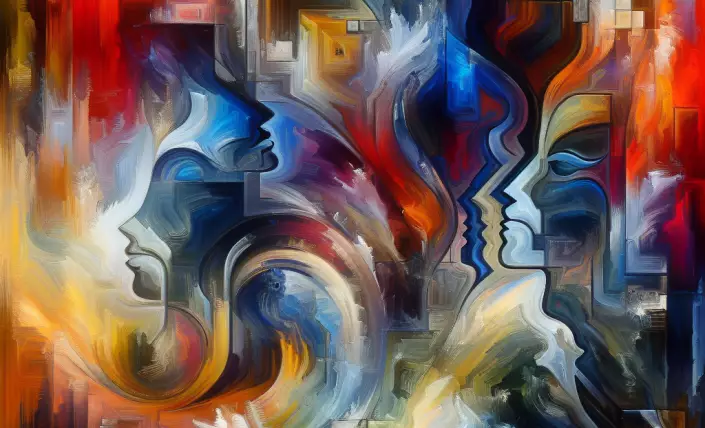
This duality is beautifully encapsulated in the concept of the 'double truth.' On one hand, there is the truth of reason, built on logic and empirical evidence. On the other, the truth of faith, which dwells in the realm of belief and intuition. These truths, seemingly divergent, coexist within us, shaping our understanding of the world. The tension between them is not an error to be corrected but a dynamic interplay that enriches our journey.
Development
To delve deeper into this paradox, imagine the scientist and the mystic, two seekers on a singular quest for truth. The scientist, armed with instruments and methodologies, maps the stars and deciphers the genes, illuminating the intricate tapestry of existence. Yet, with each discovery, new questions emerge, expanding the boundaries of the unknown. The mystic, in contrast, closes their eyes to see beyond the visible, seeking truths in silence and contemplation. Despite their disparate paths, both confront the same horizon, where certainty fades into wonder.
These twin faces of understanding are not mutually exclusive but intertwined. The rigor of scientific inquiry does not negate the insights of intuition; rather, it complements them. Together, they form a dialogue—a harmonious discord that echoes through the corridors of human thought. The pursuit of knowledge, therefore, is not a linear path toward a singular truth but a spiraling dance between reason and mystery.
Deeper Implications
This interplay has profound implications for how we live and learn. In an era defined by information, the temptation to equate knowledge with data is strong. Yet, data alone cannot capture the essence of truth, which is as much about the questions we ask as the answers we find. Understanding, in its fullest sense, requires us to embrace complexity and contradiction, to dwell in the spaces where clarity and ambiguity meet.
Moreover, this paradox challenges us to reconsider the nature of wisdom. If wisdom is the art of living well, it is not found solely in certainty but in the ability to navigate the tensions of knowing and unknowing. It is a call to humility, to recognize that our grasp on truth is always provisional, always subject to revision. In this space, we cultivate a capacity for wonder, an openness to the mystery that underlies existence.
Closing Thought
As we conclude this reflection, we find ourselves not at an end but at a beginning. The paradox of understanding invites us to a journey without destination, a continual unfolding of insight and mystery. It is a call to live with curiosity and humility, to embrace the twin faces of reason and faith as companions on our path.
In this dance of knowing and not-knowing, we are reminded that to seek understanding is to engage with the infinite. The horizon remains ever distant, yet it is in the pursuit itself that we find meaning. What then does it mean to truly know, when every answer births a new question? And how might we live, knowing that the journey of understanding is never complete?