Ancient Insight
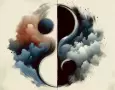
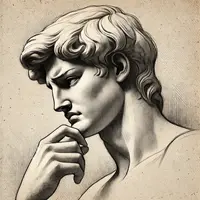
The ancient philosophers often grappled with the interplay between human emotion and reason. For the Stoics, reason was the guiding star, a beacon to navigate the tumultuous seas of emotional upheaval. They advocated for an approach to life that prioritized rational thought over the caprices of feeling, suggesting that true wisdom lay in the mastery of one's inner emotional landscape. In contrast, the Epicureans held a more nuanced view, suggesting that pleasure, as moderated by reason, was the ultimate goal. For them, emotions were not adversaries to be vanquished but potential allies, provided they were regulated by the judicious exercise of reason.
Both schools, despite their differences, recognized that emotions were not merely base instincts but integral components of the human experience. The challenge lay in understanding how these emotional impulses could be harmonized with rational thought to achieve a life of eudaimonia—a flourishing existence. This ancient insight laid the groundwork for later philosophical inquiries into the nature of human cognition and emotion, a legacy that continues to inform contemporary discussions.
The Idea's Journey
In the Enlightenment era, the debate between reason and emotion took on new dimensions. Philosophers like Hume, without explicitly mentioning him here, argued for a more empirical understanding of human nature, emphasizing that reason is often the servant of the passions. This perspective challenged the Enlightenment ideal of rationality as the supreme arbiter of human behavior, suggesting instead that our emotions play a pivotal role in shaping our beliefs and actions.
Such ideas embarked on a journey through the intellectual landscape of the 18th and 19th centuries, influencing thinkers across disciplines. The tension between reason and emotion inspired Romantic poets, who celebrated the depth and richness of human feeling as a counterbalance to the cold calculus of rationality. This cultural dialogue set the stage for modern psychology's exploration of the unconscious mind, where the interplay of reason and emotion continues to provoke inquiry and debate.
Modern Manifestation
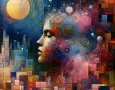
Today, the conversation around reason and emotion finds a fertile ground in fields as diverse as cognitive science, behavioral economics, and artificial intelligence. Cognitive scientists explore how emotions influence decision-making, while behavioral economists examine the irrational behaviors that arise when emotion disrupts rational choice models. In artificial intelligence, the challenge is to create machines that can emulate human emotional understanding, a task that underscores the complexity of our emotional life.
In society, the balance between reason and emotion is evident in public discourse and political decision-making. Emotional appeals often sway public opinion, sometimes at the expense of rational debate. The rise of social media has amplified this dynamic, creating echo chambers where emotion-driven narratives can overshadow reasoned analysis. This modern manifestation of the ancient insight into reason and emotion raises critical questions about the future of human cognition and societal discourse.
Personal Application
On a personal level, the dance between reason and emotion is one that each individual must navigate daily. Consider a scenario where one must decide whether to pursue a stable but uninspiring career or take a risk on a passion-driven venture with uncertain prospects. This decision involves a complex interplay of rational analysis and emotional intuition. A purely rational approach might prioritize financial security, while an emotionally driven decision could prioritize personal fulfillment.
Furthermore, relationships offer a fertile ground for examining the balance of reason and emotion. When conflicts arise, the ability to temper emotional responses with reasoned dialogue can be crucial for resolution. Yet, an overreliance on reason might lead to a failure to acknowledge and validate the emotional experiences of oneself and others. This delicate balance is a testament to the enduring complexity of human nature and the continual challenge of integrating reason and emotion in our lives.