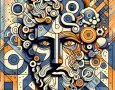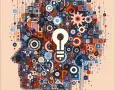

Two Perspectives
In a sun-drenched library, two philosophers, Clara and David, find themselves immersed in a discussion about the nature of belief and skepticism. Clara, with her gentle yet firm voice, contends that belief is an essential foundation for any coherent understanding of the world. Without belief, she argues, we are left adrift in a sea of uncertainty, unable to anchor ourselves to any truth. Belief, she claims, does not necessarily entail certainty, but rather a working hypothesis upon which we can build knowledge.
David, on the other hand, sits with arms crossed, embodying a more skeptical stance. He posits that belief, unless rigorously questioned, can lead to dogmatism and intellectual complacency. He suggests that skepticism, rather than being a destructive force, is a necessary tool for refining beliefs and avoiding the pitfalls of unreflective acceptance. For David, skepticism is not the antithesis of belief, but rather its companion, prodding it toward deeper understanding.
Points of Agreement
Despite their differing views, Clara and David find common ground in the recognition that both belief and skepticism play crucial roles in the pursuit of knowledge. They agree that belief provides a necessary starting point—a hypothesis—upon which inquiry can build. Without some initial assent to certain propositions, no further investigation could proceed. They also acknowledge that skepticism serves as a check against the potential rigidity of belief, ensuring that what is held as true is continually tested and validated.
Both philosophers concur that the mind must remain open and flexible, willing to adjust its beliefs in light of new evidence or insights. They are united in their conviction that dogmatism, whether in the guise of unyielding belief or radical skepticism, stifles intellectual growth. Their dialogue reveals a shared commitment to a dynamic interplay between belief and skepticism, fostering a vibrant intellectual life that embraces both certainty and doubt.
Points of Tension
The dialogue takes a more contentious turn when discussing the limits of skepticism. Clara asserts that excessive skepticism can paralyze action, leading to indecision and a lack of commitment to any course of action. She presents the scenario of a scientist who, due to relentless skepticism, refuses to accept the validity of any experimental results, thereby never contributing to the advancement of knowledge. For Clara, some level of acceptance is necessary to move forward in life and in thought.
David counters by emphasizing the dangers of unchecked belief, illustrated by the historical atrocities committed in the name of unchallenged ideologies. He argues that skepticism should persist as a critical force, questioning not just specific beliefs but the frameworks within which those beliefs arise. While Clara sees this as potentially destabilizing, David views it as essential for meaningful progress. Their exchange highlights the delicate balance between maintaining a healthy skepticism and developing a constructive belief system.
What We Learn From Both
The dialogue between Clara and David offers a nuanced exploration of the interplay between belief and skepticism. From Clara, we learn the importance of belief as a tool for grounding our understanding and enabling action. Her perspective reminds us that without some foundational beliefs, we risk falling into nihilism or paralysis, unable to assert anything about the world.
David's perspective, in contrast, teaches us the value of skepticism as a mechanism for intellectual vigilance. By consistently questioning and examining our beliefs, we can avoid becoming dogmatic and remain open to new ideas and perspectives. His view underscores the necessity of a questioning attitude to prevent the ossification of thought and to foster continual growth and adaptation.
Together, these perspectives invite us to consider how we can balance belief and skepticism in our own lives. How might we cultivate beliefs that are robust yet flexible enough to withstand scrutiny and adapt to new information? And how can we ensure that our skepticism does not devolve into cynicism or despair, but remains a constructive force for inquiry and discovery?