
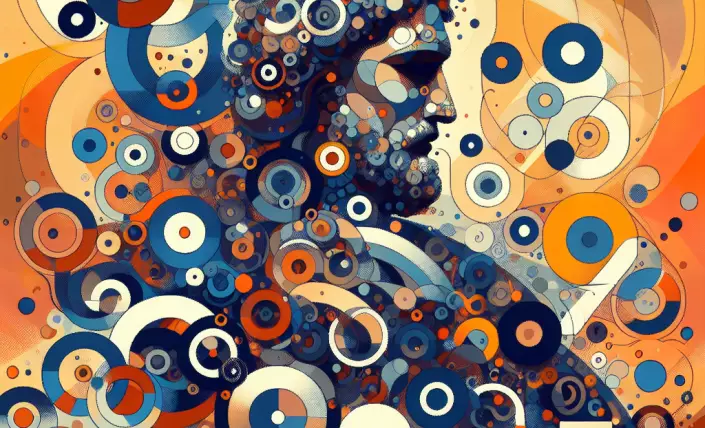
In the realm of philosophy, few questions have captivated thinkers as profoundly as the nature of personal identity. David Hume, an 18th-century Scottish philosopher, offers a radical perspective that challenges the conventional understanding of the self. According to Hume, our sense of a continuous, unchanging self is nothing more than a bundle of perceptions, a series of fleeting experiences that our minds mistakenly stitch together into a coherent narrative. This notion not only questions the foundation of personal identity but also invites us to reconsider how we perceive ourselves and our lives.
Hume posits that when we introspect, we never encounter a stable self—only a succession of sensory experiences, emotions, thoughts, and memories. These elements are constantly in flux, and any impression of a unified self is merely a mental construct. This perspective can be both liberating and unsettling. On one hand, it frees us from the constraints of a fixed identity, allowing us to embrace change and growth without the burden of adhering to a rigid self-concept. On the other hand, it raises existential questions about accountability, responsibility, and moral agency. If the self is a mosaic of transient experiences, how do we account for actions or maintain consistency in our ethical commitments?
Engaging with Hume's philosophy encourages a profound reflection on the narratives we craft about ourselves. It challenges us to confront the stories we tell—stories that often create unnecessary suffering by trapping us in identities that no longer serve us. By acknowledging the fluidity of the self, we can cultivate a more flexible and adaptive approach to life. Instead of clinging to past versions of ourselves or fearing future transformations, we can embrace the present moment with greater openness and acceptance. This philosophical inquiry, while abstract, has tangible implications for how we live, inviting us to let go of illusions and embrace the impermanent nature of existence.