
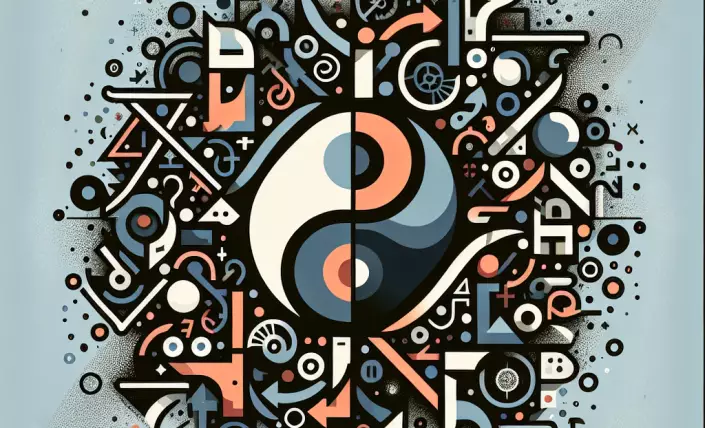
In the vast landscape of philosophical thought, Friedrich Hayek stands as a towering figure, particularly in his exploration of the complex and often unseen forces that shape human societies. Hayek's work delves deeply into the nature of knowledge, the spontaneous order of markets, and the intricate weave of individual behavior and societal norms. His insights compel us to reflect on our understanding of freedom, authority, and the ever-evolving tapestry of human interaction.
At the heart of Hayek's philosophy is the notion of spontaneous order, a concept that challenges the traditional idea of top-down control and design. Spontaneous order refers to the natural emergence of order out of seeming chaos, an order that arises not from centralized planning but from the independent actions of individuals. This concept is most vividly illustrated in the functioning of free markets, where countless decisions made by individuals lead to the efficient allocation of resources, often without any singular guiding hand. This emergent order is a testament to the power of decentralized decision-making and the limitations of human knowledge. In reflecting on this, we are prompted to consider the extent to which our own lives and societies are shaped by forces beyond our immediate perception and control.
Moreover, Hayek's exploration of knowledge extends into a critique of what he terms 'the fatal conceit'—the hubristic belief that humans can possess total knowledge and thus effectively plan and control complex systems. This critique serves as a powerful reminder of the limitations inherent in human understanding and the dangers of overreaching authority and centralization. It encourages a humility that recognizes the value of individual freedom and the diverse, often unpredictable expressions of human creativity. As we navigate our personal and collective journeys, Hayek's philosophy invites us to question the extent to which we rely on centralized authority versus the organic, emergent processes that have historically driven human progress.
Through Hayek's lens, we are urged to reconsider our place within the broader societal framework, recognizing the delicate balance between individual autonomy and the emergent orders that govern our lives. His work challenges us to embrace the complexity and unpredictability of human systems, fostering a mindset that values liberty, innovation, and the dynamic interplay of individual actions. In doing so, Hayek not only offers a profound critique of centralized control but also a vision of a society that thrives on the diversity and ingenuity of its people, a vision that remains as relevant today as it was in his time.